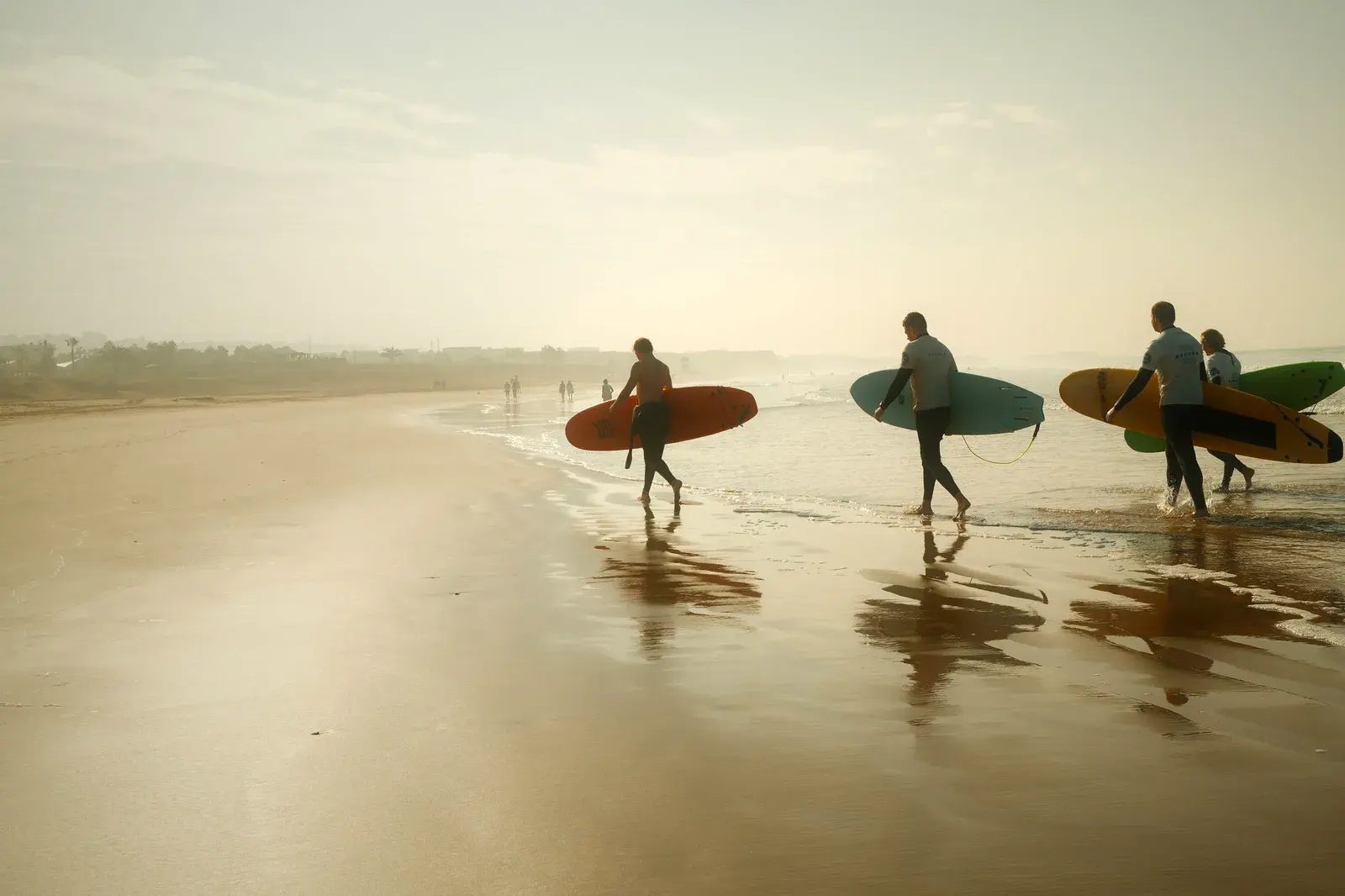
Surfing in Morocco: The Complete Local Guide (2026)
Where to surf in Morocco, when to go, and what it really costs — spots, seasons, water temperatures and beginner advice from a hostel team in Tamraght.
· 5 min
Surfing in Morocco comes down to a simple promise: consistent Atlantic swell from September to April, water that never gets truly cold, and waves for every level within a short drive of each other. This guide covers where to surf, when to come, and what it actually costs — written by the team of a surf and climbing hostel in Tamraght, the village where most people on this coast catch their first wave.
Where to surf in Morocco
The heart of Moroccan surfing is the stretch of coast just north of Agadir, around the villages of Tamraght and Taghazout. But the whole Atlantic coast works. Here's how the main spots compare:
| Spot | Best for | What it's like |
|---|---|---|
| Imourane (Tamraght beach) | Complete beginners | Sandy beach break with soft, forgiving waves — this is where we run our lessons |
| Devil's Rock & Banana Beach | Beginners → improvers | Mellow peaks a short walk or drive from Tamraght |
| Anchor Point (Taghazout) | Experienced surfers | Morocco's most famous right-hand point break |
| Hash Point & Boilers | Intermediate → advanced | Classic Taghazout reef and point waves |
| Anza | Intermediates & spectators | Fast A-frame with a strong local scene — hosts the Moroccan National Bodyboard Championships |
| Imsouane | Longboarders, everyone | A bay famous for one of the longest rides in Morocco, about an hour and a half up the coast |
| Essaouira & Sidi Kaouki | Windy-day alternative | More wind, fewer crowds — better for kitesurfing in summer |
The local logic is simple, and it's what we tell every guest: learn at Imourane, progress at Banana and Devil's Rock, and drive to Anchor Point when you've earned it. Anza is where you go to watch Morocco's best compete, not where you take your third lesson.
Imsouane deserves a day of its own — our honest guide to Imsouane covers the Bay, the logistics from Tamraght and the real prices. And the wind coast has its own guide too: Essaouira surf, honestly — when it beats this coast, and when it doesn't.
Tamraght or Taghazout as your base?
Taghazout is the famous name; Tamraght, ten minutes south, is the quieter village sitting directly in front of the beginner beaches. If your goal is to learn or progress, staying in Tamraght means walking to your wave instead of driving to it. Our rooms at Azul Berg are a few minutes from Imourane on foot.
If you're an experienced surfer chasing the famous points, either village works — the spots are one short taxi ride apart.
Still torn? Our honest Tamraght vs Taghazout comparison breaks down prices, crowds, nightlife and beaches village by village.
And if you want the full village picture — cafés, the Tuesday market, day trips — we wrote a complete local guide to Tamraght.
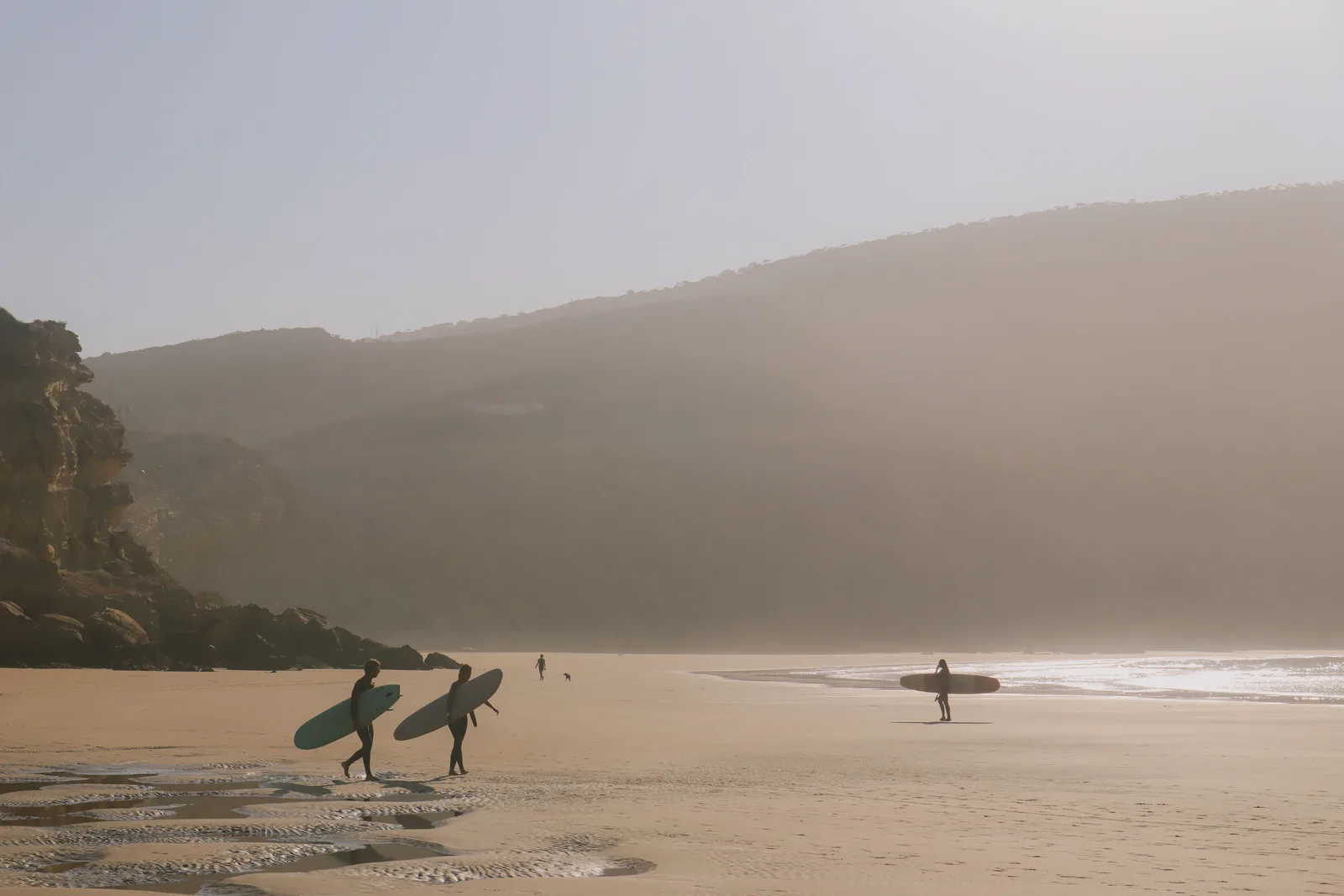
When to go
| Season | Water temp | Wetsuit | Who it suits |
|---|---|---|---|
| Oct – Mar | 16–19°C | 3/2 (some prefer 4/3 in Feb) | Everyone — peak swell season |
| Apr – Jun | 17–19°C | 3/2 | Fewer crowds, still consistent |
| Jul – Sep | 20–22°C | Boardshorts or a thin top | Beginners — small, clean, warm |
Winter is prime time: the big north Atlantic swells arrive and the point breaks light up. But if you're learning, don't fear summer — smaller waves are exactly what you want, and the water is at its warmest (about 21°C in September, per sea temperature records).
The air is mild all year. Even in January you'll surf in sunshine and eat dinner outside.
What surfing in Morocco really costs
These are our actual prices in Tamraght — not estimates:
- Beach surf lesson (2–3 hours): €35 per person, board and wetsuit included
- Full surf day: €50 per person
- A full surf pack — daily lessons, all gear, transfers to the spots, your room, homemade breakfasts and lunches: €250 for 2 nights, €540 for 6 nights
- Private airport transfer: €30 per way, up to 4 people
Compared with surf destinations in Europe, the difference is not the lesson price — it's that accommodation, food and transport stay cheap enough that a full week here often costs what a weekend costs elsewhere.
Comparing camps? Our Taghazout surf camp price guide breaks down what packages include and what usually costs extra, and our Morocco surf camp guide helps you choose by level, budget and travel style.
Your first lesson, step by step
Every beach surf lesson we run follows the same arc:
- Pickup from your accommodation, or meet at the spot
- Gear fitting — surfboard and wetsuit are included
- Safety briefing and ocean awareness: currents, the channel, how the beach works
- Warm-up and technique on the sand
- Into the water — most people stand up on day one at Imourane
- Debrief, and honest advice on what to work on next
The biggest mistake first-timers make is skipping the ocean-awareness part and paddling straight out. The Atlantic here is friendly, but it's still the Atlantic — knowing where the current runs matters more than your pop-up.
Getting here
Fly into Agadir (Al Massira, AGA). From there it's about 45 minutes to Tamraght — we run a private transfer for €30 each way (up to 4 people), door to door. The village itself is walkable: beach, cafés and the hostel are all a few minutes apart.
Wondering about waves in Agadir itself? Our honest Agadir surf guide explains what the city bay can and can't do.
If you want everything organised before you land — bed, lessons, gear, transfers — you can put a trip together here and we'll confirm availability the same day.
Photo by Thomas Balabaud on Pexels
Frequently asked questions
- Is Morocco good for beginner surfers?
- Yes — it's one of the friendliest places in the world to learn. Sandy beach breaks like Imourane in Tamraght produce soft, rolling waves most of the year, lessons are affordable, and the air stays warm even in winter.
- When is the best time to surf in Morocco?
- September to April brings the most consistent Atlantic swell, peaking October to March. Beginners can surf all year — summer waves are smaller and gentler, which is actually an advantage while you're learning.
- How much does a surf lesson cost in Morocco?
- At our hostel in Tamraght, a 2–3 hour beach lesson is €35 per person and a full surf day is €50 — board, wetsuit and pickup included. Prices along the coast are broadly similar.
- Do I need a wetsuit to surf in Morocco?
- From November to March, yes — a 3/2 is the local standard and some people prefer a 4/3 in February. From July to September the water reaches around 21°C and many surf in boardshorts, though a thin suit keeps sessions longer.